New Year, New Documents: What Needs Notarization in 2026

The start of a new year often brings important life changes—new homes, new businesses, updated legal plans, and major financial decisions. As individuals and organizations move forward in 2026, many will encounter documents that require notarization to be legally valid, enforceable, or accepted by third parties.


Understanding which documents commonly need notarization can help you avoid delays, rejected paperwork, or last-minute scrambling. Whether you’re handling personal matters or business transactions, knowing what to expect makes the process faster and more efficient.

Why Notarization Matters

Notarization exists to protect all parties involved in a transaction. A notary public verifies identity, confirms willingness to sign, and helps deter fraud. Many institutions—banks, courts, title companies, and government agencies—require notarized documents before they will process or recognize them.


As legal and financial activity increases at the beginning of the year, demand for notary services rises nationwide.


Common Personal Documents That Require Notarization

Many individuals update personal and legal paperwork in January. Some of the most commonly notarized personal documents include:


  • Power of Attorney (POA) documents

  • Affidavits and sworn statements

  • Estate planning documents, such as trusts


  • Guardianship and parental consent forms

  • Medical authorization forms


  • Divorce or separation agreements

These documents often carry significant legal weight, making proper notarization essential.


Real Estate Documents That Require a Notary

The real estate market remains active year-round, but many transactions ramp up early in the year as buyers and sellers plan ahead. Notarization is a critical step in real estate closings and refinancing.


Common notarized real estate documents include:


  • Deeds and grant deeds

  • Mortgage and loan documents

  • Refinance paperwork

  • Property transfer forms

  • Seller disclosures

Because real estate transactions are time-sensitive, access to reliable notary services—whether mobile or remote—can prevent costly delays.

Business and Corporate Documents

January is also a popular time for businesses to form new entities, update agreements, or execute contracts. Notarization is often required to formalize these actions.


Frequently notarized business documents include:


  • Operating agreements

  • Partnership agreements

  • Corporate resolutions

  • Vendor and service contracts

  • Commercial lease agreements

For businesses operating across multiple states, working with a service that can coordinate notarization nationwide simplifies compliance and execution.


Financial and Insurance Documents

Financial institutions frequently require notarization for documents involving assets, beneficiaries, or authorizations. At the start of the year, many people review or update these materials.

Examples include:


  • Loan agreements

  • Insurance claims or beneficiary forms

  • Retirement account documents

  • Debt settlement agreements

Ensuring these documents are properly notarized helps prevent processing delays and legal challenges.


Remote Online Notarization vs. Mobile Notary Services

In 2026, clients have more notarization options than ever before. Depending on the document type and state regulations, you may be able to choose between:


  • Mobile notary services, where a notary travels to your location

  • Remote online notarization (RON), allowing documents to be notarized digitally via secure platforms

Each option offers convenience, but not all documents qualify for remote notarization in every state. Understanding which method applies to your situation can save time and frustration.


What You’ll Need for Notarization

Before scheduling a notary, make sure you’re prepared. Most notarizations require:


  • A valid, government-issued photo ID

  • Unsigned documents (signatures must occur in front of the notary)

  • All parties present, unless otherwise allowed

  • Awareness of document-specific requirements

Being prepared helps ensure a smooth appointment and avoids rescheduling.


Start the Year Prepared

The new year is an ideal time to handle important paperwork proactively. Knowing which documents require notarization—and having access to fast, reliable notary services—allows you to move forward with confidence.


SignDocs Today helps clients nationwide connect with trusted notary services, including mobile and remote options where available. Whether you’re finalizing legal documents, completing a real estate transaction, or executing business agreements, having the right notarization support makes all the difference.


Starting 2026 informed and prepared ensures your documents are executed correctly the first time—saving time, reducing stress, and keeping your plans on track.

FIND A NOTARY NEAR YOU
Two women seated at a conference table exchange a document in a bright office.
June 30, 2026
Learn what identification is required for notarization, what to bring to a notary, and how ID requirements vary across the United States.
Two people in a meeting, hands over papers on a reflective conference table
May 31, 2026
Reliable commercial notary services for contracts, agreements, and corporate documents. Protect your business with fast, accurate notarization from Sign Docs Today
Miniature purple tram and tiny objects on a blue board atop a wooden table
April 22, 2026
Learn how power of attorney notarization works, why it matters, and what to expect before signing your POA document.
A small model house and keys sit next to a pen on a contract, with blurred people in the background.
April 1, 2026
Learn which real estate documents require notarization this spring, including deeds, loan docs, and affidavits. Work with a trusted loan signing agent.
Man in a blue blazer on the phone, seated at a desk with dual monitors and a tablet, in an office.
February 11, 2026
Compare mobile notary and remote online notarization (RON) services. Find out which is best for your documents with Sign Docs Today.
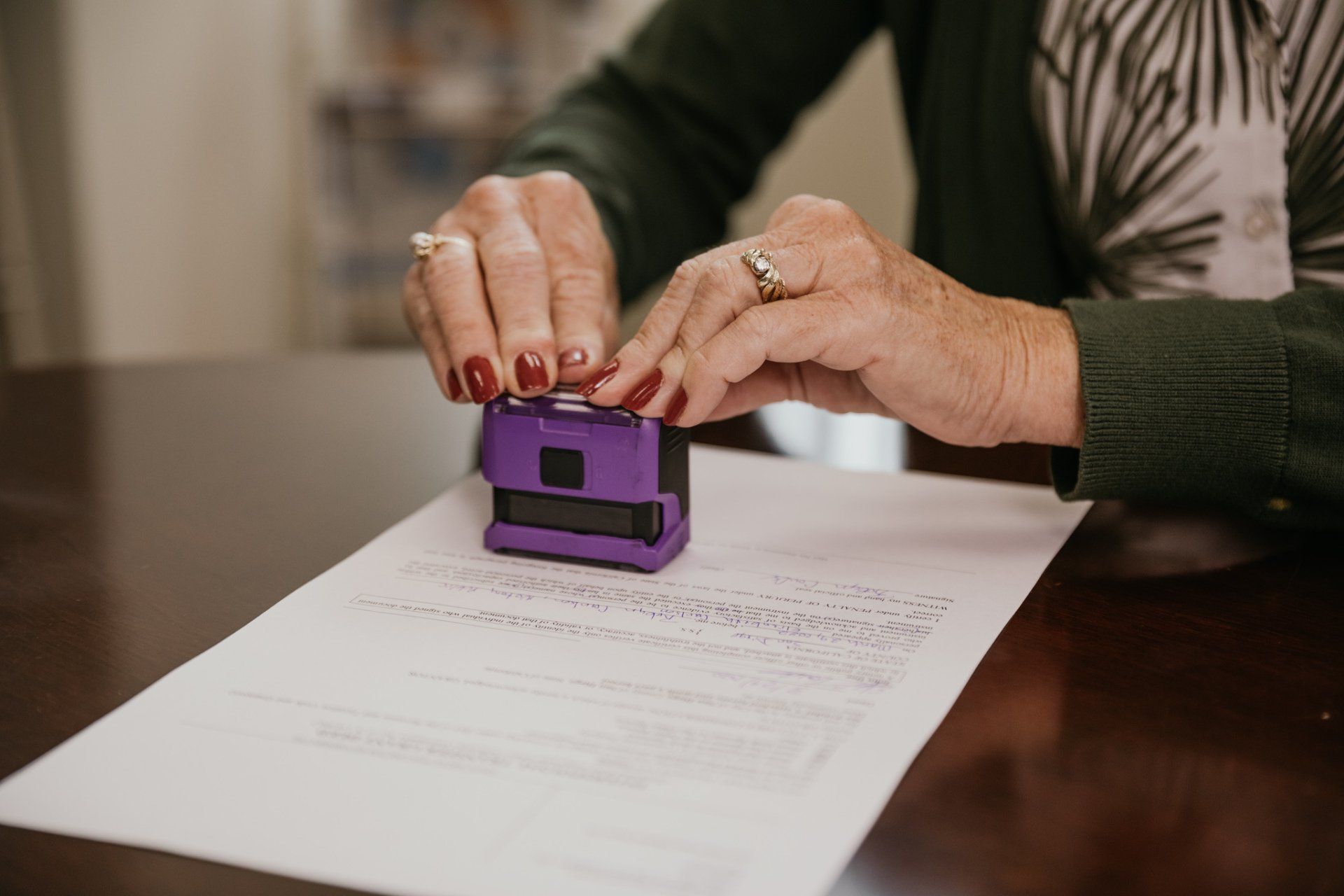
Person stamping a document with a purple stamp; hands and paper in focus on a wooden table.
December 19, 2025
Get answers to the most common notary questions in the U.S., including ID requirements, signer presence, refusals, and how notarization works.
Person pointing at a sheet of paper open on a dark table, with additional paper underneath.
November 24, 2025
Ensure your healthcare wishes are legally valid with notarized living wills, powers of attorney, and advance directives from Sign Docs Today.
Man writing in notebook at desk, open binder with two pens, keyboard and mouse visible.
October 25, 2025
Discover how notaries support attorneys and clients in the legal industry. Learn why law firms trust Sign Docs for reliable mobile notarization.
A wooden stamp with black ink pad, books, and a person writing in background.
September 24, 2025
Learn which documents require notarization—real estate, legal, medical, and more—and see how Sign Docs Today makes the process fast and secure.
June 9, 2025
In today’s fast-paced business environment, time is money, and convenience is key. When important documents need to be notarized—contracts, agreements, loan documents, or legal filings—the traditional process of visiting a notary’s office can slow you down. That’s where mobile notary services come in.  A mobile notary is a commissioned notary public who travels to your location to perform notarial acts. Whether you're finalizing a deal at your office, hosting a meeting off-site, or working from home, a mobile notary meets you where you are. Here are five compelling reasons to use a mobile notary for your business transactions. 1. Save Time and Reduce Disruptions Coordinating a trip to a notary office can disrupt your schedule, especially when you're managing multiple tasks or meetings. A mobile notary eliminates the need to leave your office or wait in line, allowing you to focus on your core business activities. Why it matters: Mobile notaries work on your time and come to your location. This is especially helpful when multiple signers are involved or when documents are time-sensitive. 2. Enhance Client and Partner Convenience If you’re working with clients, vendors, or business partners who also need to sign documents, a mobile notary adds a professional touch by meeting all parties at a convenient location. This level of service reflects well on your business and can streamline the signing process for everyone involved. Why it matters: Making the signing process easier for others strengthens business relationships and improves the customer experience. 3. Support After-Hours and Urgent Needs Business doesn’t always stick to regular hours. Whether you're closing a late-night deal, finalizing an agreement over the weekend, or responding to an unexpected legal request, many mobile notaries offer flexible scheduling, including evenings and weekends. Why it matters: You won’t be constrained by the 9-to-5 window. Mobile notaries can accommodate emergency signings and last-minute needs, helping you stay agile and responsive to changing circumstances. 4. Minimize Errors in High-Stakes Transactions Business documents often involve multiple signatures, initials, and notarizations. A trained mobile notary is experienced in handling these transactions and can guide signers through the process to ensure everything is completed correctly. Why it matters: Incorrect or incomplete documents can delay funding, contracts, or legal processes. A mobile notary helps prevent costly mistakes that might otherwise go unnoticed. 5. Increase Privacy and Security Some transactions—such as financial agreements, corporate resolutions, or proprietary contracts—require a higher level of discretion. A mobile notary allows you to complete these signings in the privacy of your office or conference room, rather than a public notary location. Why it matters: Conducting sensitive signings in a controlled environment reduces the risk of exposure and provides added peace of mind. Conclusion Whether you're signing a business loan, finalizing a vendor agreement, or onboarding a new partner, mobile notary services provide flexibility, efficiency, and professionalism that traditional notary services can’t always match. By bringing the notary to you, mobile services ensure that your operations run smoothly and your transactions stay on schedule. For busy professionals and growing businesses, working with a trusted mobile notary is not just convenient—it’s an innovative business.